


Madera’s killer fire
- 1 hour ago
- 4 min read
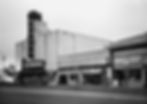
For The Madera Tribune
The Madera Theater.
As Madera moved into the 1940s, many looked forward to the return of good times. The Great Depression was over, and Prohibition had wilted away. Agriculture had replaced lumber as the town’s economic base, and business downtown was booming.
J.C. Penny, located on the corner of E Street and Yosemite Avenue, was offering the latest in fashions at low, low prices, and Montgomery Ward was shocking the town with its Wednesday sales, one of which featured a 20-gallon washer with a “famous” Lovell wringer for $36.95. A deal could be made with nothing down and a mere $4 per month.
For those interested in transportation, Emilio Pistoresi offered Maderans a new Dodge from his F Street store for $898, and one could buy a new Ford at Shuman & Nichols for $854. The Miller Motor Company took care of the Buick lovers, while Conrad Shebelut handled the Chevrolet die-hards.
In the meantime, Safeway had come to town and was undercutting the home-grown grocers with their loss leaders. It was difficult for local merchants to compete with catsup at 10 cents per bottle and fresh ground hamburger at 2 pounds for 29 cents.
Indeed, Madera had grown up; its mainstreet movie houses stood as a reminder of that fact. Saturday matinees and nighttime movies proved to be entertainment par excellence on the local scene, and it remained that way until that fateful fire in 1940 changed the appearance of Yosemite Avenue forever.
Madera has always been fearful of fire and with good reason. Several conflagrations almost consumed the town. Had it not been for the valiant efforts of a vigilant fire department, the whole of downtown Madera might have lain in ashes several times.
Most of the time, however, with a quick alarm, the skill of the firefighters, and a little luck, downtown fires have been contained without serious injury or loss of life. Volunteers as well as full-time firefighters have almost always returned to their homes after each battle, ready to fight again when required to do so. However, there have been times when luck simply ran out despite all preparation and precaution. The fire at the Madera Theatre in 1940 was one of those times.
“Captain Caution,” starring Victor Mature, Louise Platt and Leo Carrillo, was scheduled to be shown at the Madera Theater on Friday, Nov. 30, 1940. At 5:30 p.m., those plans received a jolt. A fire broke out in the ‘’heating plant adjacent to the building.” Within minutes, it was pouring fire into the theater, setting the ceiling and roof ablaze.
At 5:38, Fire Chief John Brammer received the alarm. He speedily dispatched the fire truck, driven by Joe Cappelluti and carrying volunteer firemen Owen Barr and Clyde Haymond. Upon arriving at the fire, Barr and Haymond quickly hooked up the fire hoses and took them from the truck onto the roof via ladders. Within minutes a host of additional volunteers arrived on the scene and every man turned to fighting the fire with a fury.
As the firemen were battling the blaze from atop the theater, Chief Brammer attempted to enter the building to determine the extent of the fire. Suddenly the roof and sidewalls collapsed without warning. Although Brammer narrowly escaped being trapped, Barr and Haymond were plunged into the resulting inferno.
‘’The collapse of the roof threw the entire building into a swirling mass of flames,’’ reported The Madera Tribune. Now the firefighters’ problem was compounded. The neighboring houses and garages were placed in danger by the large pieces of burning material which the wind was spreading over the area. Efforts were divided between attempts to rescue the fallen firemen and preventing the flames from engulfing the whole town.
The crew, aided by citizens with garden hoses, worked feverishly, and shortly after 8 p.m., the fire was sufficiently under control to allow Brammer to “put all lines into the task of cooling off the portion of the interior where Barr and Haymond had fallen.”
When the firemen were able to enter the theater, they discovered Haymond’s body to the rear of the building. He had apparently survived the fall and had crawled more than 100 feet toward the “rear riot door” on B Street. This exit was designed as an emergency door and would have opened “at a touch” had Haymond been able to put his weight against it. He was tragically denied this egress by the smoke and flames, which overcame him.
Within another 20 minutes Barr was found alive! A hose crew moving its line heard a faint echo of a cry for help. They were able to determine the direction from which the plea was coming. Its origin was beneath a pile of brick and rubbish near the center of the building. Frantically the crew dug Barr from the debris. He had been miraculously spared serious injury.
Owen Barr was saved by a combination of factors. When the roof first gave way he, unlike Haymond, fell between the rows of seats. Before he could move, a portion of the loge structure tumbled down and came to rest on the seats below. This gave Barr protection from the bricks, which subsequently began to fall. These bricks piled up over him to a depth of two or three feet, and the water which was continuously sprayed on them kept it sufficiently cool underneath to sustain Barr’s life.
Several other members of the department were injured in the theater blaze. Cappelluti was wounded by a “flying hose.” John Pimental suffered a sprained back as did Ernie Hayes and Chief Brammer. All were treated and placed under the care of Dr. Ray Dearborn and Dr. D.H. Ransom.
The body of Clyde Haymond was taken to Glendale where it was interred in Forest Lawn Cemetery. Madera Mayor J.B. Gordon led a local delegation to represent the city at the service. In addition, the Madera Volunteer Fire Department passed a resolution on Dec. 2, 1940, expressing its “admiration and respect for a member who had given his life in the performance of his duty.”
The Madera Theater was rebuilt within a year and for decades, it played an important role in the downtown area. Although it no longer sits as a monument to the history of the city, its past is secure, and that makes it worth remembering.


